History of Bonetown
Field dossier
Quick facts
- Founded As
- Uranium and iron mining outpost
- Original Era
- The Reformation
- Turning Point
- Abandoned during the Great Drought
- Current Ruler
- Baron Marcus Cross
- Published
- Updated
- Author
- Drako Productions
Overview
Bonetown began as a Reformation-era uranium and iron mining outpost before drought, abandonment, outlaw rule, and Marcus Cross transformed it into the dominant trade settlement of the Bonelands.
The mining outpost
Bonetown began during the early Reformation, when new power structures were forming around physical resources and trade networks after the Great Market Crash and the Five Dark Years. Uranium and iron deposits made the site valuable, and a mining outpost grew around their extraction.
Even before it became a major town, the outpost’s mines and industrial structures made it an important site in the surrounding wasteland.
Abandonment during the Great Drought
The Great Drought made the mining settlement increasingly difficult to sustain as water shortages spread across the wasteland.
Bonetown’s original operation was eventually abandoned. Its industrial structures remained behind: mine works, storage buildings, scrap yards, and fortified spaces that could be reused by anyone strong enough to hold them.
Reoccupation
Slavers and outlaws later reclaimed the ruins. The abandoned mining infrastructure gave the new settlement a foundation of industrial structures and salvage.
Trade and violence developed together, laying the foundation for Bonetown’s modern districts and harsh ownership laws.
The siege of Bonetown
About ten years before the current story, a large raider army surrounded Bonetown. The settlement’s old leadership failed to organize an effective defense.
Marcus Cross, then a mercenary captain, released Bonetown’s most dangerous enslaved pit fighters and imprisoned criminals. He offered the survivors positions in his new guard if they killed the raiders and threatened to kill anyone who retreated.
Cross sent them in repeated waves against the raiders’ machine guns to deplete the attackers’ ammunition. Established canon states that thousands were sacrificed to break the siege. The survivors became the first Yard-Dogs, the security force that now guards Bonetown’s gates, collects taxes, patrols its districts, and enforces Cross’s rule.
The rule of Marcus Cross
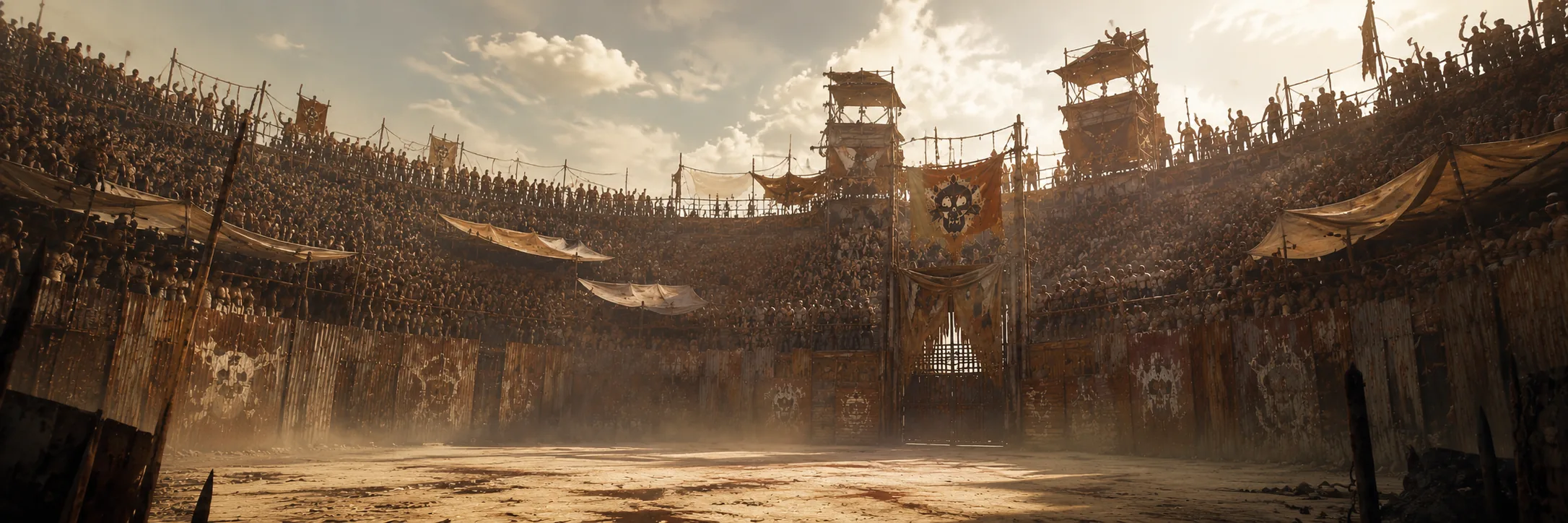
Marcus Cross rose to power after the siege and consolidated control over Bonetown’s water, power, gates, markets, and arena. Public spectacle became one of his main tools of government. The Fighting Pits rewarded strength, the gates turned access into revenue, and licensed merchants operated under his protection.
Cross’s organization grew into the Bone Empire, extending Bonetown’s influence through guards, traders, arena fighters, toll collectors, and allied operators. Independent groups still exist within the settlement, but they survive by paying tribute or avoiding direct conflict with Cross. See Factions and gangs for the groups represented in the current build.
Bonetown today
By 2210, Bonetown is the dominant settlement of the Bonelands and a major center of Southwest wasteland trade. Its mining origins remain visible in the rusted industrial landscape, but its economy now depends on markets, salvage, protection, arena entertainment, and control of regional routes.
Bonetown presents itself as chaotic, yet its disorder has boundaries. Marcus Cross controls the systems that matter most, the Yard-Dogs enforce his authority, and every district reflects the settlement’s central belief: possession is power.